
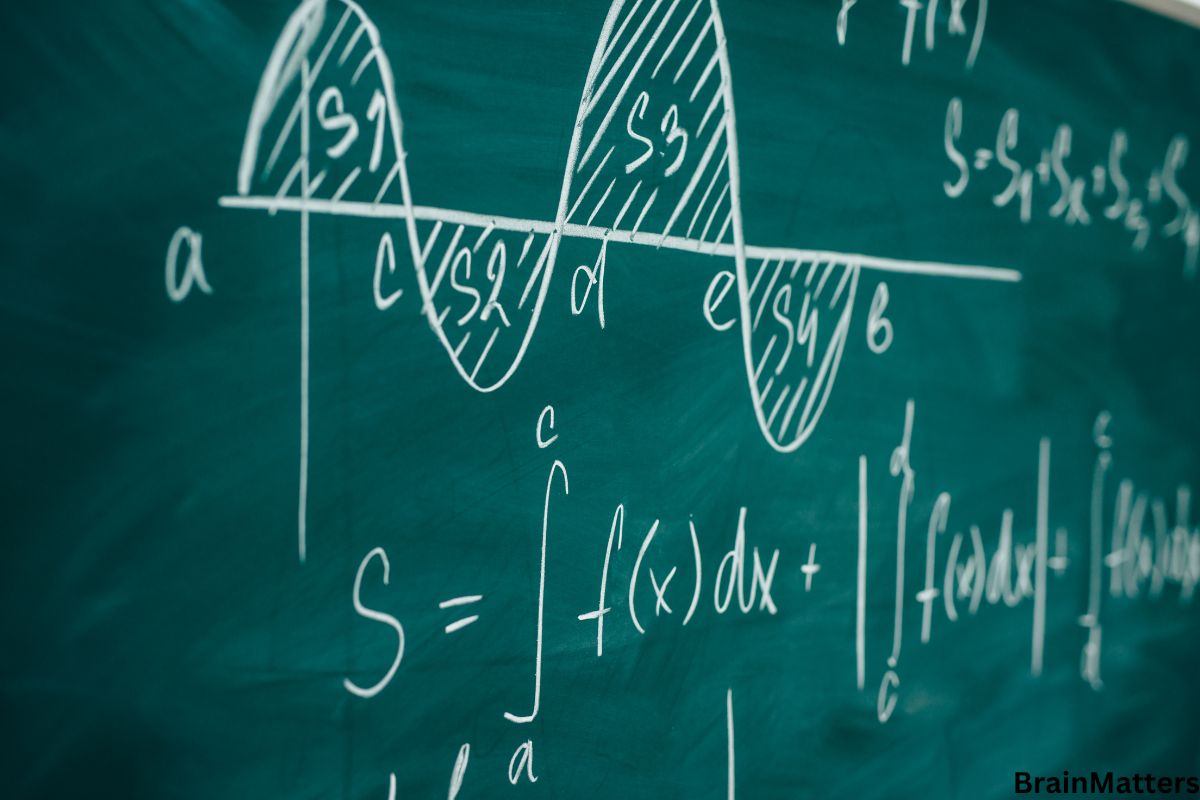
Integral Calculus is the study of accumulations—finding areas under curves, volumes, and more. It complements differential calculus by reversing the process of differentiation.
[mathjax]
For many students, integrals can feel even more abstract than derivatives, but with the right strategies, you can conquer integral calculus and discover its power in modeling real-world phenomena.
In this article, we’ll explore essential integral concepts, key techniques (like the Fundamental Theorem of Calculus), and study methods that will help you navigate integrals with confidence.
1. Recall Differential Calculus Basics
1.1 The Connection
Integral Calculus and Differential Calculus are two sides of the same coin. The Fundamental Theorem of Calculus states that differentiation and integration are inverse operations.
\(\frac{d}{dx} \left(\int_{a}^{x} f(t) \,dt\right) = f(x)\).
1.2 Prerequisite Knowledge
- Ability to manipulate algebraic, trigonometric, and exponential functions.
- Understanding of derivative rules (chain rule, product rule) can help in advanced integration techniques (like substitution).
2. Understand the Concept of an Integral
2.1 Area Under a Curve
An integral \(\int f(x)\, dx\) can be interpreted as the area under \(f(x)\) from one point to another on the \(x\)-axis.
2.2 Summation Approach
Before formal integration, you might learn to approximate areas with Riemann sums: dividing the area into rectangles or trapezoids. This leads to the limit definition of the integral.
2.3 Real-World Analogies
- Distance from Velocity: If \(v(t)\) is velocity, \(\int v(t)\, dt\) gives displacement over time.
- Accumulated Quantity: In economics, integrating a rate of production gives total items produced over a period.
3. Fundamental Theorem of Calculus (FTC)
3.1 Part 1
If \(F(x)\) is an antiderivative of \(f(x)\), then:
\(\int_{a}^{b} f(x)\, dx = F(b) – F(a).\).
This relationship is the cornerstone of many integration problems.
3.2 Part 2
It formalizes the derivative of an integral function, making advanced problem-solving possible (like evaluating definite integrals swiftly).
3.3 Practical Application
Learn to see how indefinite integrals (finding an antiderivative) and definite integrals (evaluating areas or total changes) tie together.
4. Key Integration Techniques
4.1 Basic Antiderivatives
Familiarize yourself with standard integrals:
- \(\int x^n\, dx = \frac{x^{n+1}}{n+1} + C\), for \(n \neq -1\)
- \(\int \frac{1}{x}\, dx = \ln|x| + C\)
- \(\int e^x\, dx = e^x + C\)
- \(\int \sin x\, dx = -\cos x + C\)
- \(\int \cos x\, dx = \sin x + C\)
4.2 Substitution (u-Substitution)
This is the counterpart to the chain rule. You let \(u = g(x)\) in an integrand that resembles \(f'(g(x))g'(x)\).
- Example: \(\int \sin(3x)\, dx\). Let \(u = 3x \Rightarrow du = 3\,dx\), so \(dx = \frac{du}{3}\). The integral becomes \(\int \sin(u)\,\frac{du}{3}\).
4.3 Integration by Parts
Analogous to the product rule. If you have \(\int u \, dv\), then:
\(\int u \, dv = uv – \int v \, du\)
Useful for integrals involving \(x \cdot e^x, x \cdot \ln x\), or product of polynomials and trig functions.
4.4 Partial Fractions Decomposition
For rational functions \(\frac{P(x)}{Q(x)}\), if \(Q(x)\) factors, you can split it into simpler fractions and integrate each term separately. E.g.,
\(\frac{3x+4}{(x+1)(x-2)} = \frac{A}{x+1} + \frac{B}{x-2}\)
4.5 Trigonometric Integrals
Handles integrals of forms like \(\int \sin^m x \cos^n x\, dx\) or \(\int \sec x \tan^2 x\, dx\). Often involves using trig identities to simplify the integrand.
4.6 Trigonometric Substitution
When dealing with \(\sqrt{a^2 – x^2}\), \(\sqrt{a^2 + x^2}\), or \(\sqrt{x^2 – a^2}\), trig substitution can transform the integral into something more manageable.
5. Practice with Varied Problems
5.1 Start Simple, Then Increase Complexity
- Linear Substitution: \(\int \cos(2x)\, dx\).
- Multiple Techniques Combined: \(\int x^2 e^{3x}\, dx\) might need integration by parts more than once.
5.2 Use Spaced Repetition
Don’t just do a batch of integrals once. Review them periodically to keep the process fresh in your mind.
5.3 Problem Collections
- Textbooks often have problem sets arranged by technique.
- Online resources like Khan Academy or MIT OpenCourseWare provide interactive quizzes and videos.
6. Definite Integrals and Applications
6.1 Evaluating Definite Integrals
\(\int_{a}^{b} f(x)\, dx = F(b) – F(a)\)
Pay attention to sign changes or discontinuities within the interval.
6.2 Area Between Curves
To find the area enclosed by two curves \(y=f(x)\) and \(y=g(x)\):
\(\text{Area} = \int_{x_1}^{x_2} |f(x) – g(x)|\, dx\).
Choose the correct top and bottom functions if not using absolute value.
6.3 Volumes of Revolution
- Disk Method: Rotating a curve around the \(x\)-axis or \(y\)-axis to form a “solid of revolution.”
- Washer Method: Accounts for gaps (inner radius).
- Shell Method: Another approach for certain volumes, especially when rotating around the \(y\)-axis.
6.4 Physical and Engineering Applications
- Work Done by a Force: \(W = \int F(x)\, dx\).
- Center of Mass: Involves integrals of density functions.
- Fluid Pressure and Force: \(\int \rho \cdot g \cdot \text{depth} \, dA\).
7. Visualization and Tools
7.1 Graphing Utilities
Desmos or WolframAlpha can help visualize integrals, showing the region under a curve or the shape of a rotated solid.
7.2 Symbolic Computation
Tools like Mathematica or Symbolab can solve integrals symbolically. Use them to check your work, but still practice manual steps to ensure conceptual understanding.
8. Study Groups and Collaboration
8.1 Peer Teaching
Explaining integration steps helps solidify your grasp of which technique to use and why.
8.2 Joint Problem-Solving
In group sessions, each member can tackle a different integral approach, then compare solutions and see which method is most efficient.
8.3 Seek Clarification
If a particular technique (like trig substitution) feels confusing, hearing a peer’s explanation might clarify the concept in a way your textbook or teacher didn’t.
9. Common Pitfalls and How to Avoid Them
9.1 Forgetting the Constant of Integration
For indefinite integrals, always add “\(+ C.\)” This might seem minor, but it can be crucial in certain contexts (like differential equations).
9.2 Mixing Up u-Substitution Steps
Set up your substitution carefully. Write down \(u = \dots , du=\dots,\), and ensure your integrand matches these expressions.
9.3 Overcomplicating Problems
Sometimes a simpler approach works:
- Checking if a simple substitution suffices before jumping to advanced methods.
- Considering partial fractions only if the denominator truly factors.
9.4 Failing to Check Work
A quick derivative check of your final answer can confirm correctness. If \(\frac{d}{dx} (\text{your result}) \neq \text{original integrand}\), re-check your steps.
10. Taming Integration Anxiety
10.1 Identify Which Technique to Use
Always ask: Is there a direct formula I recognize? If not, is it suitable for:
- Substitution?
- Integration by Parts?
- Partial Fractions?
- Trig or Trig Substitution?
10.2 Practice Slowly
Break each integral into steps. Rushing fosters mistakes and confusion.
10.3 Get Timely Help
Don’t wait too long if you’re stuck. A quick question to a tutor or teacher can save hours of frustration.
11. Exam Prep for Integral Calculus
11.1 Make a Techniques Chart
List out each technique and the types of functions or structures it’s best suited for. Keep examples handy.
11.2 Do Mixed Sets
Often, exams mix integrals requiring different approaches in a single section. Practice “grab-bag” problem sets where you have to quickly identify the right method.
11.3 Use Time Wisely
- Outline your solution approach first to avoid rewriting entire integrals multiple times.
- If stuck on a problem, move to the next and return later if time allows.
12. Looking Beyond the Classroom
12.1 Real-Life Integration Examples
- Statistics: Probability density functions and cumulative distributions.
- Biology/Medicine: Dosage calculations, population growth models.
- Architecture/Design: Curved structural designs rely on integral geometry for load calculations.
12.2 Future Courses
Integral calculus paves the way for:
- Differential Equations: Where integrals solve for functions describing physical processes.
- Multivariable Calculus: Integration in two or three dimensions (double/triple integrals).
12.3 Lifelong Analytical Skills
Even if you don’t see yourself using integrals daily, the problem-solving mindset you develop—breaking down complex tasks, applying systematic rules, verifying results—translates into many career paths.
Conclusion
Integral Calculus transforms the concept of summing infinitesimal slices into a powerful tool for calculating areas, volumes, and a wide array of real-world phenomena.
By mastering foundational ideas (like the Fundamental Theorem of Calculus), practicing various integration techniques (substitution, integration by parts, partial fractions, etc.), and applying them to definite integrals and applications, you’ll develop both conceptual understanding and problem-solving finesse.
Remember: consistent practice is key. Take advantage of visual aids, collaborative learning, and self-checking strategies (like derivative validation).
With diligence and curiosity, you can make integral calculus not just a course requirement but a skill that enriches your mathematical journey and opens up new avenues in science, engineering, finance, and beyond.


